Control Resonant
Fast Facts
Control Resonant
Developer: Remedy Entertainment
Publisher: Remedy Entertainment
Website: https://controlgame.com/en
Genre(s): Action Role-Playing
Platform: PS5, Windows, Xbox X/S, macOS
Age Rating: PEGI 18
Release Date: 24th September 2026
Price: £45 (Varies)
A code was provided for review purposes
Control Resonant
Control, the 2019 action-adventure game by Remedy, gets a much-anticipated sequel in Control Resonant. Originally this sees you working for a secret US government agency that deals in everything paranormal, defying the laws of reality: the FBC, or Federal Bureau of Control.
Jesse Faden is our original protagonist, and as you explore the “Oldest House” to find your brother, armed with Jesse’s abilities and Service Weapon, you come to realise that not everything is as it seems, especially when dealing with the Hiss — a rather hostile and creepy entity that has invaded the Oldest House, possessing FBC staff.
Fast-forward to 2026, and not all is well in the world…
Jesse has awakened her brother Dylan from a coma by stabbing him in the heart with the Aberrant, an Object of Power (spoiler alert), and then, like any good family reunion in a video game or movie, disappears. Very dramatic.
It seems the Hiss have escaped the Oldest House while the FBC were dealing with another event, the Patterning, and, like a Hollywood movie, Manhattan is ground zero.
The original Control, for me, was a breath of fresh air. The environment, the story, the music — everything felt purposeful. The Oldest House was an Escher painting come to life, and Polaris was one of my favourite missions and level designs in a long time. So, to say I was excited about the sequel would be an understatement.
Freedom vs Control
Remedy has given us something we didn’t have in the first one. Irony.
A game called Control is now allowing you, Dylan, so much more freedom, under the guise of control.
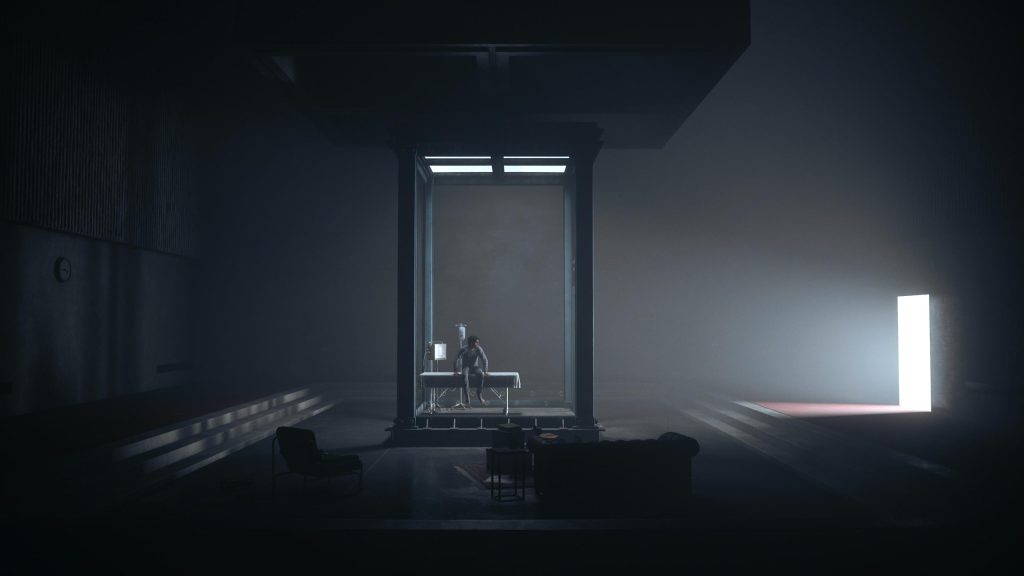
Dylan was a prisoner, a child thrust into a programme where he was controlled and manipulated into becoming a powerful Parautilitarian. By 13, he was subjected to increased measures to manifest his abilities, leading to abuse by his mentor and subsequently killing both his mentor and a number of other FBC agents after medication sent him spiralling. He was blamed, contained and treated as a threat.
Now the FBC needs his help. They reluctantly release him, but he is again controlled by a mobile containment device — think The Running Man — with an explosive attached to the back of his neck. He is watched and managed like the nuclear weapon they all fear him to be.
And then the game gives him control.
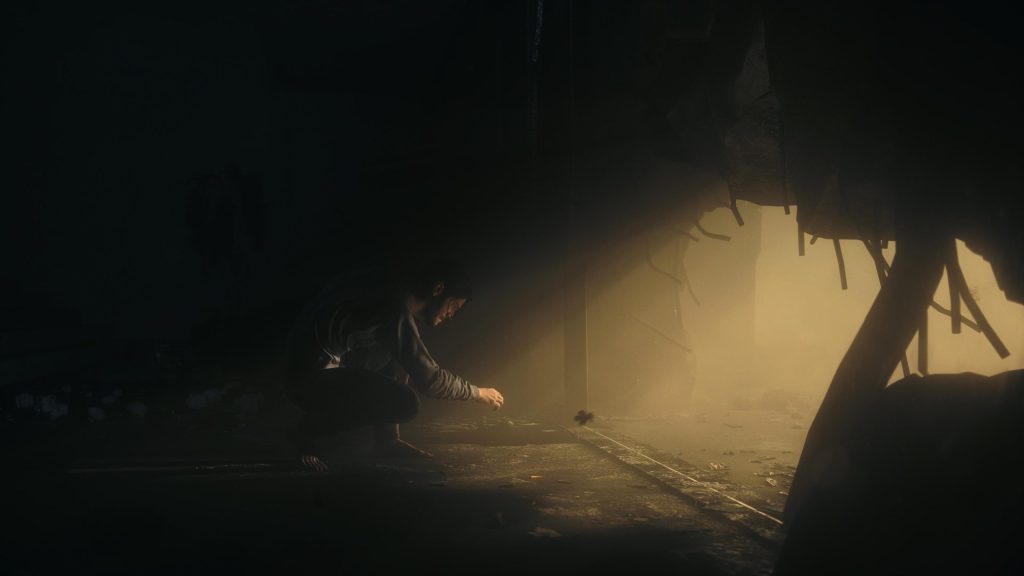
This alone is where the game is really clever. Dylan’s movement isn’t like Jesse’s; it’s raw. It’s a manifestation of everything he has spent his life being denied. From being in a cell with no options, he can now manipulate gravity and have nothing — or nobody — beneath him.
Yet for all his freedoms, there is ultimately a catch. Dylan is a weapon. The FBC treats him as a point-and-shoot accessory. We, the player, decide where to go, what to explore and how to shape his abilities, but as you get close to the other characters, the emotional narrative is taken away from us and we spectate as his past comes back to haunt him.
This creates such a fascinating thread at the heart of Resonant for me. The Oldest House wanted control, Dylan wanted freedom, and now we, the player, have to decide which is the correct way.
What does Dylan’s redemption actually mean when the people who imprisoned him are now asking him to save the world?
FBC & Corporate Bureaucracy
Hidden narrative is an incredibly detailed and well-structured theme throughout this game.
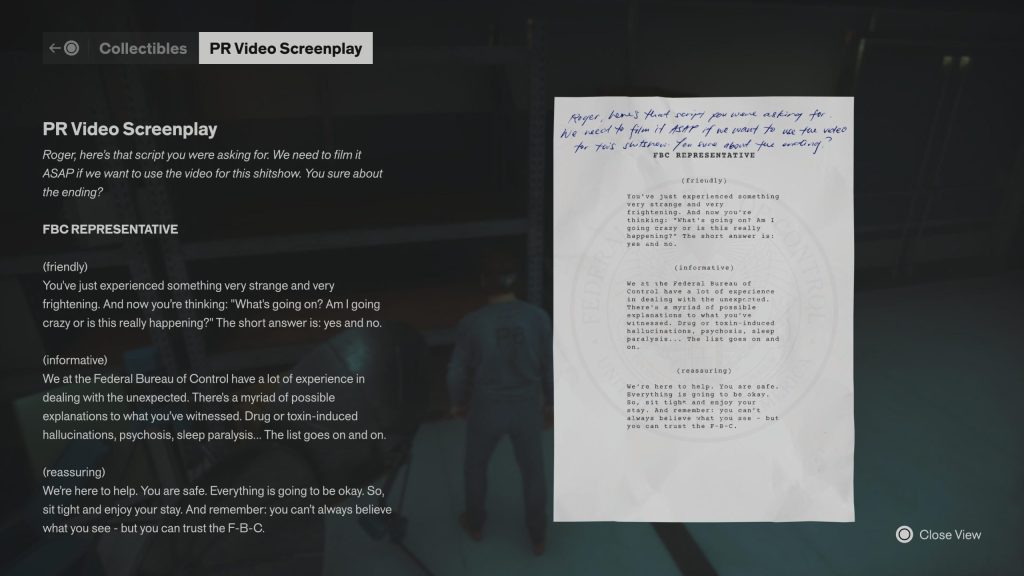
As I have traversed the skylines, I have read documents, stared at computer screens and realised that everything in this world has some meaning. The reports, enemy documentation, banter, violations and mundane administrative details aren’t just filler; they’re a narrative structure that builds the world around you.
The FBC is this clandestine investigative service that researches impossible phenomena and yet still writes it all down on paper, or records memos and procedures like it’s the 1980s.
With Resonant now exploding that secret onto the streets, the FBC is literally dying trying to contain and investigate it, yet still filing their reports and arguing over terminology. Even trying to blame floating corpses on a “gas leak”.
There’s a small part of me that chuckles at the sight of a poor “Gary” being flown up into the air, or splattered across a pavement, while his mate “Dan” is just voice-noting the event because his boss wants a report by 5pm.
It doesn’t stop with anecdotal comments. The documents hold personalities that differ depending on who has written them, showcasing a real subtext of workplace relations and characters.
They also offer insights that can be genuinely helpful, as they explain enemy attack patterns and weaknesses. Controlling how you adapt to the enemy is a subtle FBC detail here.
Encounter → Fight → Learn → Understand → Fight differently.
The FBC tries to understand the impossible by documenting it. The player does exactly the same thing.
I often ignored the main story to focus on the world around me. I wanted to traverse and understand the world that has been built for us to play in, and I was not disappointed.
There are some really weird and wonderful side quests to experience. The karaoke machine piqued my interest, and the spiral of strange really begins from there. Then, when you drop into the Gap and get shouted at by the Board, a small chuckle ensues.
Control gave us the foundation for our story and, here in Resonant, the depth is obviously much deeper, expanding the myths and supernatural. But there’s also a messy depth to it. There’s so much happening that you can get lost in the lore and that overshadows some of the journey for me. Does hiding a lot of the details mean the player might never see them? Does it promote exploration and reading? Is this a form of control in itself? Because with such a large amount of collectibles, one person will experience the narrative in a different way to someone else.
Resonant shows us that a world doesn’t feel real unless it gives you a glimpse into the lives of people who exist outside the main story. The exhausted employee’s report, a conversation overheard, or a memo about another impossible object.
The irony here is that the FBC made Dylan’s entire life a case file, and now here he is, walking through a world made entirely of them.
Traversing the “Open World”
Movement in this game is by far one of the biggest upgrades.
Gravity manipulation and how you explore the world is, by far, very freaking cool.
Where Control asked you to explore and unlock the Oldest House, Resonant asks you to forget reality and understand that conventional geometry can be overcome.
I began by thinking “Where can I go?”
Now I’m looking at places and trying to figure out how do I get there.
However, calling this game “Open World” is difficult to justify. It exists as a semi-open world that has different playgrounds connected by very clever interconnected systems, usually security checkpoints, that allow you to move through without the loading screens.
There is some frustration, however, in the mapping system. Getting around and understanding places I have visited, when the terrain is so warped in its reality, can be a bit of a head-scratcher.
A world that deliberately breaks conventional geography needs a map that helps you understand it. Unfortunately, Resonant’s map doesn’t always achieve that.
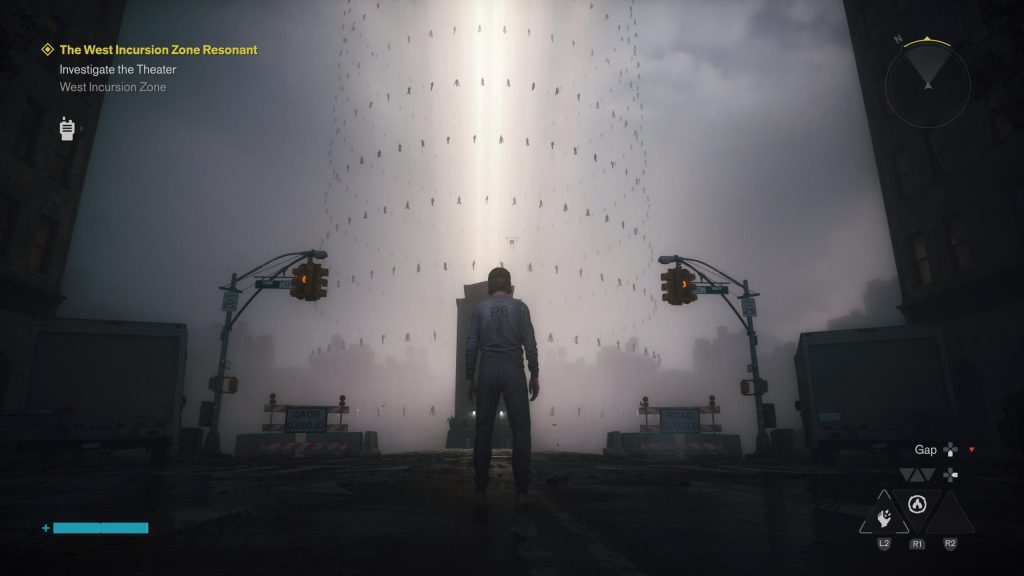
Dylan Faden: Human Weapon
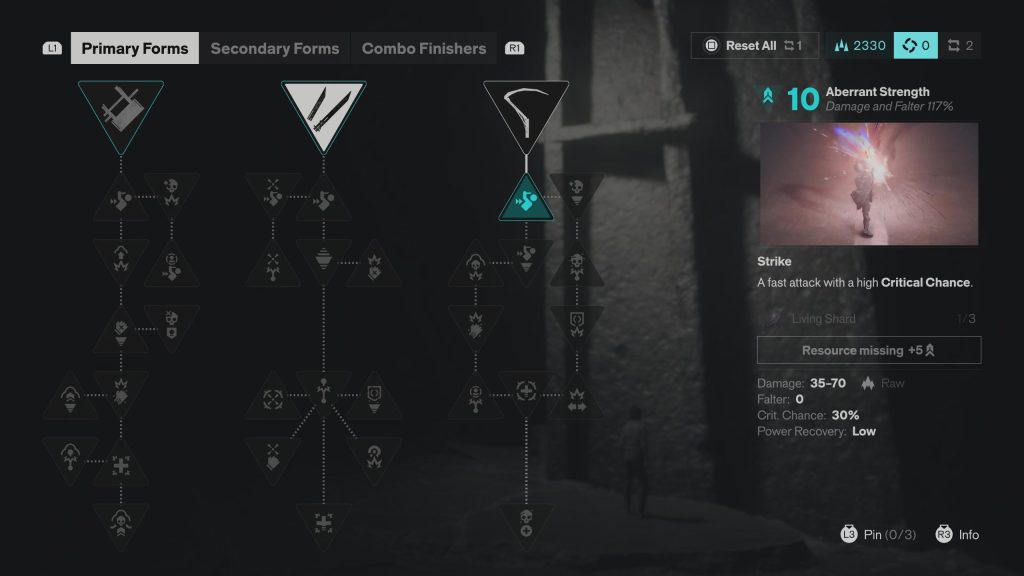
The Gap seems to be some metaphysical area in Dylan’s mind, where you can progress the RPG elements of the game.
Entering and exiting the Gap is interesting. There’s no menu system for upgrades; instead, you walk around his psyche and change or upgrade his abilities, create Artifacts and then test those abilities before re-entering the real world.
There are a lot of numbers in the Gap, and this presents both a challenge and a flaw, because there are so many options and different styles of attacking that you have to essentially experiment with what works best for you.
However, they all boil down to the same thing…
How hard or how fast do I hit the monster with my magical murder-stick?
Combat becomes somewhat repetitive once you find your rhythm and style, and that’s okay, it isn’t tedious by any means, but hit, dodge, jump, launch, bash… it definitely takes it out on your controller.
I personally began with the Glaive, because usually where there’s one Hiss, there’s ten more. But somewhat into the game, specifically the Dancer, I realised it didn’t feel right.
So back into the Gap to reset and unlock the Strike to try a different approach, which now works better for me and my style.
However, this back-and-forth may not be worth it for some players, and they may simply stick with the same style. For others, they may spend hours in the Gap trying to create the perfect build for them.
This is where Resonant falters for me. I don’t need an overabundance of choice in weaponry, I just need Dylans brutality, or even a simpler way to switch between styles when required.
I actually miss the Director’s Service Weapon a bit, though.
But this is the difference between the elegance of Jesse and the brutalism of Dylan.
Assist Mode
Resonant takes difficulty settings and then gives you overarching control with Assist Mode.
This struck me as a little odd when I first played, but actually, how two people play and enjoy their games can really change their experience.
So Resonant gives you the ability to fine-tune your experience without removing achievements.
Remedy understands that some people only get a couple of hours to game, and a frustrated gamer might simply not come back to play.
In Assist Mode, you can change enemy aggression, incoming and outgoing damage, how quickly your power regenerates and enemy projectile speed. You can even turn on god mode.
Which, interestingly, I think should be locked behind a first playthrough.
However, Remedy offers all of that without restricting your rewards.
Whether you want just a story-driven adventure, or a high-octane, kill-or-be-killed adventure, it’s all available to you.
Remedy says:
“Our philosophy is straightforward: if you run into a wall and the friction becomes too much, we’d much rather you adjust the rules and keep playing than put the controller down and stop.”
“Your time is valuable, and how you experience the game is ultimately up to you. That’s why we don’t gate any trophies or achievements behind Assist Mode. Use the settings however you need to and play Control Resonant on your terms.”
And honestly, I think that philosophy is worth applauding.
Games are entertainment, and entertainment shouldn’t have to be frustrating just because someone else decided what the “correct” way to play is.
Petri Alanko
When I first started playing Resonant, I didn’t react much to the soundtrack.
As you stand in Manhattan, you can hear the hum of the city, the wind, subtle howls, a minor piano key or two. It’s purposeful background noise.
But the subtle nature of that audio, and how it builds and feeds around Dylan’s adventure, is really interesting.
There’s also not much music in the game — something I hadn’t really noticed until I found the Parking Garage. Suddenly, the music becomes a real emotional driver and you’re transported into what feels like a different game.
There’s more life. More excitement. More energy.
And that’s when I realised that perhaps the lack of music is part of the point.
Resonant doesn’t constantly tell you how you should feel. It lets the world breathe, leaving the soundscape to create an atmosphere rather than simply providing a soundtrack.
Then, when the music finally arrives, it matters. It feels earned, and perhaps that’s the most Control(ed) thing about it. Into the sinkhole really drives that feeling home.
The strange, unsettling quiet is the norm. Until suddenly, it isn’t!
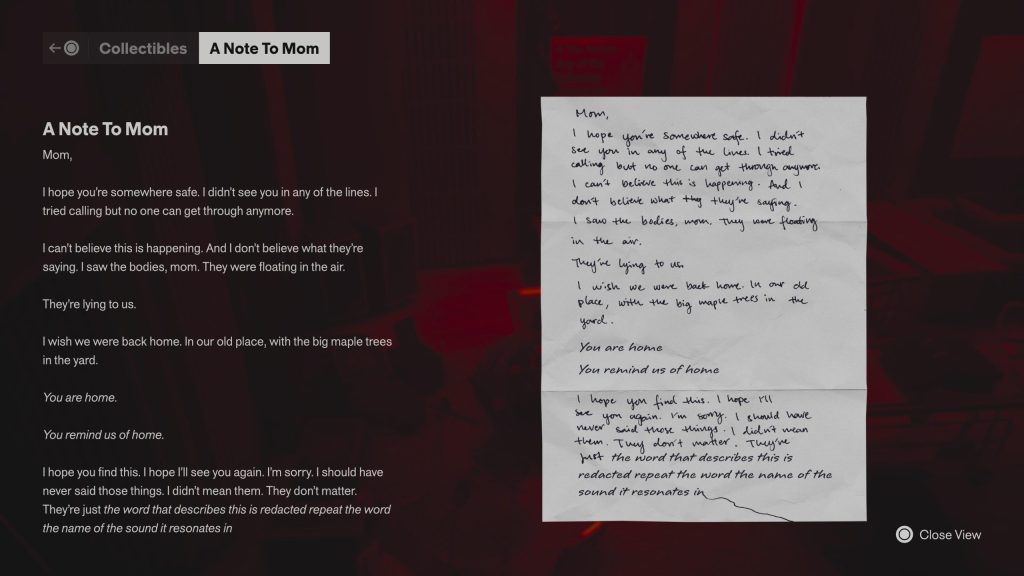
Finding Jesse Faden
The story boils down to two simple objectives for Dylan. His first and most important motivation is finding his sister and helping her; secondly, it’s a personal journey of overcoming his past by helping those who kept him subjugated.
However, as the game develops, what are we meant to feel for Dylan?
He has a very dark and traumatic backstory. He has been subjected to testing and incarceration, and prolonged corruption by the Hiss has truly altered his being. Prime Candidate 6 was his designation, and it felt fitting to keep him in his P6 pyjamas for my play-through.
However, unlike protagonists you may play as, he was previously the herald for the human invasion by the Hiss. He is quite literally a villain.
The redemption arc we journey through is one of regaining his humanity and showing he is no longer controlled. His search for his sister is leashed by the FBC and the containment device he wears. With a single click, his head could pop off.
So is he just playing the game until he can remove the containment device? Is he truly sorry and repenting?
This complex anti-hero aesthetic is definitely a more dark-humoured and psychologically damaged mindset, shaped by trauma and isolation. One which is completely opposite to that of his sister.
So do I care about Dylan because I’m getting to know him?
Because Zoe tells me I should care about what happened to him?
Or should I hate him because Arish fears him?
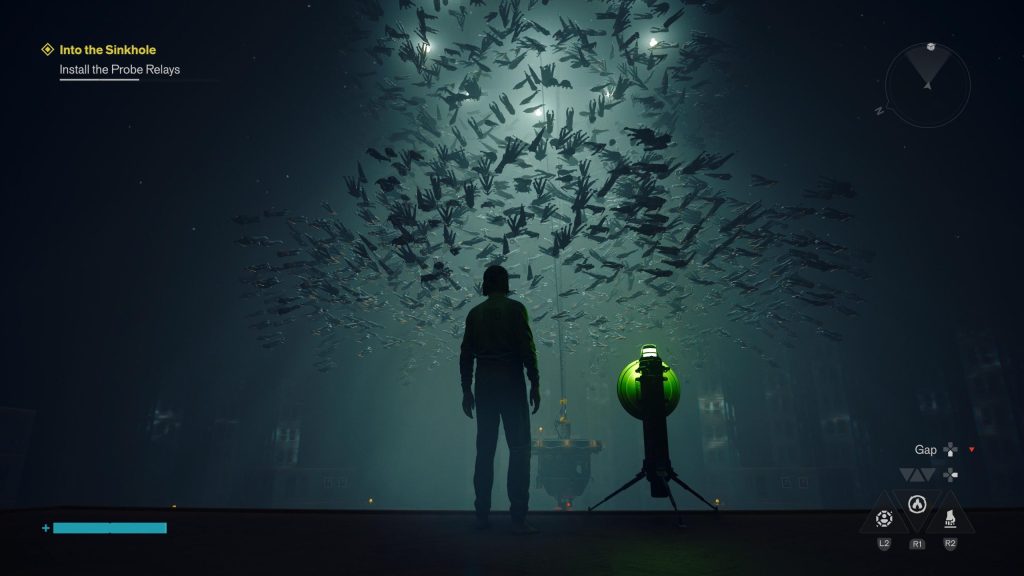
The Weird
It wouldn’t be a Remedy title without the weird, and there are moments when I’m like… WTF am I actually playing?
This isn’t a game you can play around your kids, with corridors littered with floating corpses. This isn’t exactly the sort of nightmare I’m planning to give them.
Wandering through the Oldest House back in 2019, I genuinely wasn’t ready for what happened next. The rooms could change and become impossible. A small office could become a nightmare. And then there was my favourite level, “Ashtray Maze”, where a simple Walkman and another masterpiece of a song, “Take Control”, set the tone for one of my favourite sequences in gaming.
So here-in lies the issue: we know Remedy is weird, so it’s not that Resonant won’t be weird.
The question is: can Remedy still surprise me?
Instinctively, I open every door and enter every eerie alley with suspicion. Remedy has already set the tone with its predecessor, so normal rules don’t apply and the best missions and experiences are the weirdest ones.
The karaoke machine is the perfect example. Dylan is wandering Manhattan, tearing apart the Hiss. People are floating in the sky, reality is collapsing, and you wander into an apartment and find a group of partygoers ultimately stuck in a “dance until they die” situation unless someone finishes the song.
Those are the moments that make me go, “Wow.” Because the game doesn’t need another Ashtray Maze. Although the love of Escher really stands out in Resonant.
Resonant is creating its own moments that remind me that this isn’t just a hack-and-slash.
It’s a journey through the paranormal, alongside a journey of self-discovery and redemption.
And it’s bloody brilliant.
For a game about control, Resonant’s greatest achievement may be finally letting go — and reminding us why we fell in love with Remedy in the first place.
Rapid Reviews Rating

5 out of 5
5


You May Also Like

Mario & Sonic at the Olympic Games Tokyo 2020 Review

Gotham Knights Review