Starfield – The PlayStation 5 Review
Fast Facts
Starfield
Developer: Bethesda Game Studios
Publisher: Bethesda Softworks
Website: Starfield
Genre(s): Action RPG
Platform: Windows – Xbox Series X/S – PlayStation 5
Age Rating: PEGI 18
Release Date: September 2023 / April 2026
Price: £35 – £55 (Premium Edition)
A Premium Edition code was provided for review purposes
Starfield on PlayStation 5 isn’t the game people argued about back in 2023. I say this as someone who tried in on Xbox and didn’t continue. That makes this release a strange one to review. It’s being sold somewhat like a new arrival, but in reality, it’s more a definitive edition. A game that has ironed out complaints with updates and expansions, by a developer who’s clearly responding to criticism.
Writing this review, I wanted to make sure I gave it my full attention. So, with over 80 hours and rising in the game, it clearly isn’t just a port. The real question for me though, isn’t whether it runs better on different hardware, but are all these changes enough to turn something I once disregarded, into something worth staying for?
Just in case you missed this one back in 2023. Starfield is Bethesda’s long-standing ambition to create an RPG in space, defined by freedom. Set across 120 star-systems and over 1,000 planets, it places you the player, in the role of a “thrust-upon” explorer. Chasing answers about humanity’s place in the universe. Combining somewhat open-ended storytelling with space and land traversal, ship and planetary customisation, faction-driven narratives and more side-quests than you can imagine. The journey here is entirely your own to make. This huge ambition is central to what makes Starfield compelling, but it also shapes many questions surrounding how it feels to play.
Changes – The Free Lanes Update
With this PS5 release, the game looks to improve on a few things; those notably include the items most people were complaining about back in 2023.
Let’s focus back to launch. Starfield’s biggest issue wasn’t the scale, but how disconnected that scale felt to us, the players. Exploration at best was reduced to menus and loading screens, which considering it’s a game about space, meant the journey never felt like part of the experience.
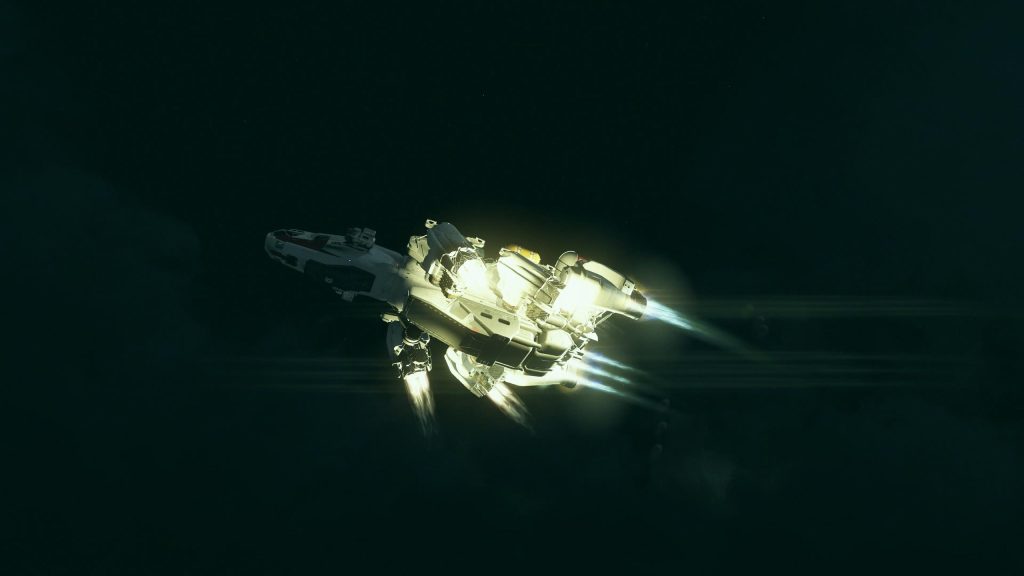
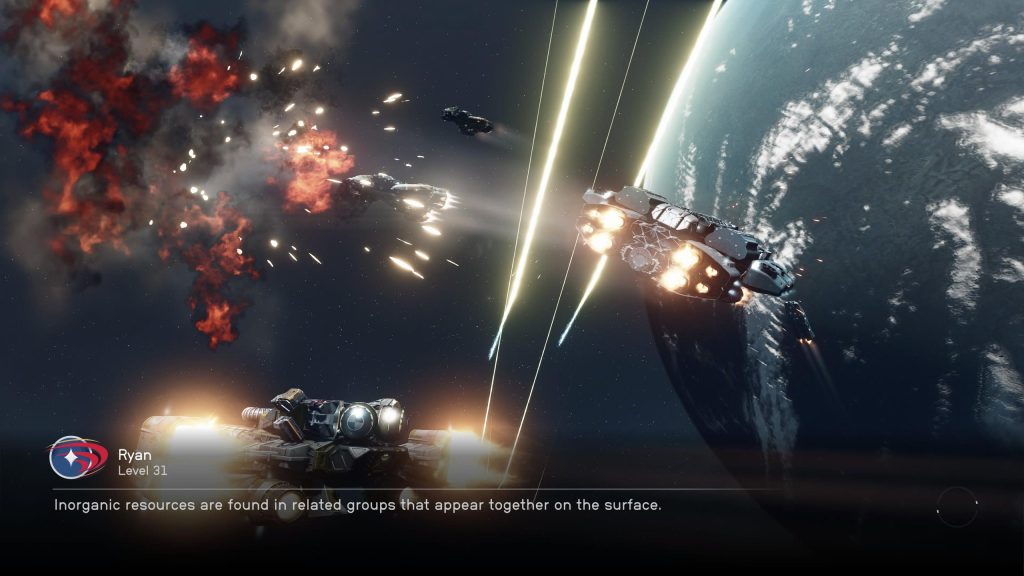
Free Lanes is Bethesda’s response to the criticism. It introduces manual interplanetary travel, “Cruise Mode” that essentially lets you walk about your ship mid-flight and some increased “dynamic” space encounters. Unfortunately, for me, these encounters still feel the same.
80+ hours in, and yes, I realise this isn’t a lot, but for review purposes it is! Travelling through space now feels like part of the game. Yes, in a game about space, and travel…
For me though, the illusion is thin. The fundamental system is the same, only how you navigate them has changed. Essentially it’s just extra steps!
Free Lanes makes the journey more noticeable, just not necessarily more meaningful.
83 Hours Later
After more than 80 hours in game and reaching level 40, bouncing between factions, side content and exploration, this version of the game finally caught my attention in a way it didn’t back in 2023.
There’s definitely a rhythm to Starfield now. Systems that once felt lacking or disjointed, show signs of layering. With traversal and expanded encounters, it gives the universe a sense of life. It’s definitely easier to lose hours here than it used to be.
But that sense of flow comes with a trade-off. For me, the more time I spend in Starfield, the more it reveals how loosely everything is held together.
Yes, you’re never short of things to do; missions from factions, side quests from walking past people and overhearing interactions, the missions log list fills very quickly. Yet none of it feels like it warrants your attention and progression becomes a drift through rather than a need to push forward.
I’ve spent hours playing without feeling like I’ve done anything meaningful.
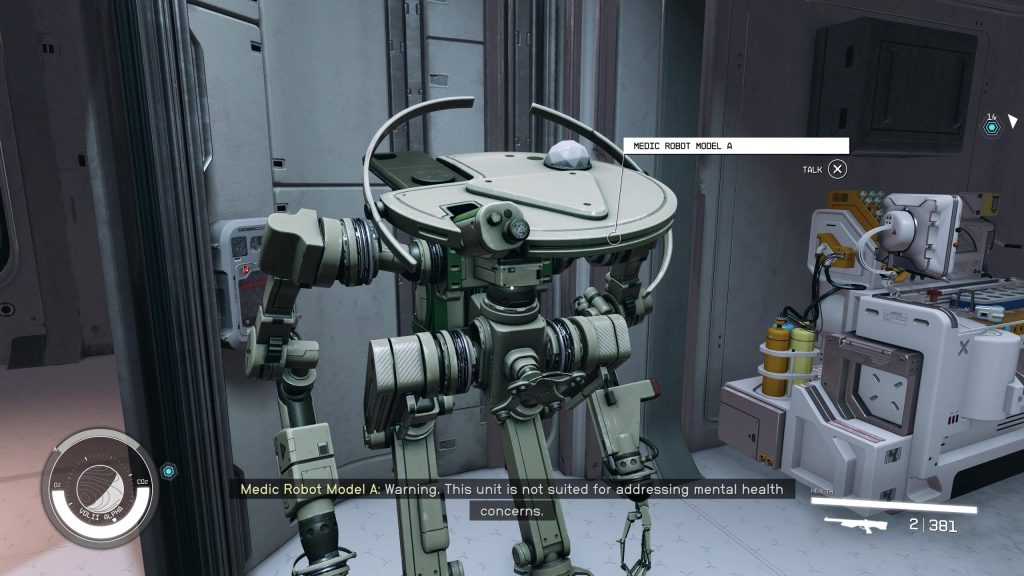
This feeling isn’t helped by the technical side either. Even in this polished version, crashes and bugs still happen, often enough to break my immersion (not constantly), but enough to remind you this is very much a Bethesda game.
This is what frustrates me. Because there is something quite compelling in Starfield. The systems are deeper, the worlds are broader, and there are moments where it can be genuinely absorbing, but again, it rarely builds towards anything urgent, or adds any weight to the universe.
The one exception here being the mission “Eyewitness”, where Terramorphs attack the starport of New Atlantis. You are in a race to subdue mind-controlled civilians and kill 3 Terramorphs, whilst advancing the UC storyline. This mission felt like it had so much potential to add real gravitas, yet falls short at its lack of length. As a side-line, the threat of Terramorphs felt short lived, they could have easily been the first acts main threat as you explore for artifacts.
Performance & Stability
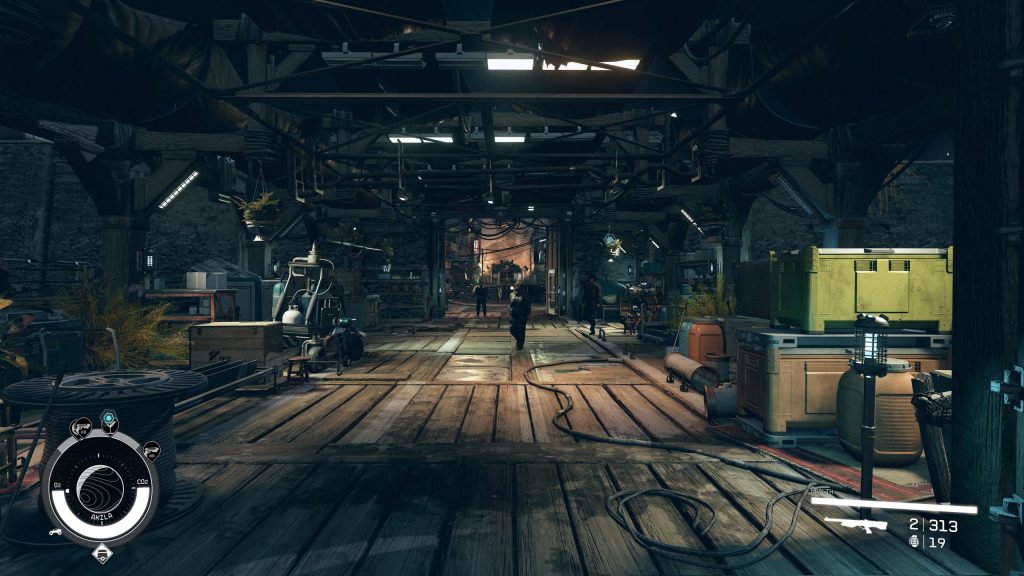
On a technical and visual level, Starfield on PS5 (PS5 Pro here) is beautiful and clearly a more stable experience than it was at its original launch. Performance mode gives me smoother frame rates and runs exactly as I’d hoped on my 4K VRR 120hz television. Yet it’s not without its frustrations. Over my extended play I’ve run into quite a few bugs, from freezing when entering or leaving a new area, suit audio issues that don’t disappear and graphical glitches, like running around on fire constantly, with no fire status effect on my person, which just breaks that immersion. Each require a save-reload or close the app and restart. They just interrupt my longer play sessions and I feel less inclined each time to restart the game.
Now, no game is infallible and this version of the game is undeniably more polished, just not consistently reliable. Just when I’m hours into the game, there’s an awaiting subtle reminder that the underlying quirks remain.
For me, in game that already struggles with momentum, and you’re the one forcing the narrative, these small technical issues have a way of breaking the flow.
Content vs Pacing
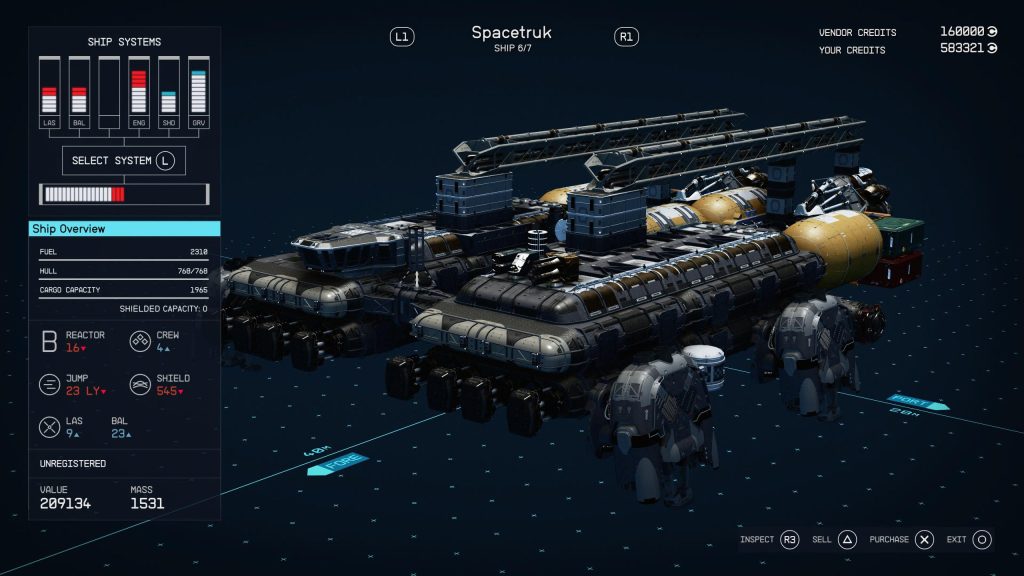
There’s no shortage of content in Starfield. Factions, Exploration, Side Missions, Crafting, Ship Building and Outpost Management… the list goes on and on; and with the addition of the Terran Armada expansion, the game offers returning players a constant stream of “things to do”.
The issue for me isn’t quantity, although at the start it felt overwhelming, the issue is momentum.
Most activities exist in isolation. I have spent hours jumping between quests and systems and planets, but very little of it builds towards something larger. Storylines unfold at their own pace; side quests can feel laborious and disjointed. With the overall experience feeling like a collection of moments, rather than a cohesive journey.
Yes, Terran Armada follows a similar pattern. There’s more to engage of course, more systems to explore and more rewards to chase, but they fundamentally don’t change how the game drives me forward. My one thought throughout my entire playtime has been, that Starfield gives me endless reasons to keep playing, but no reason to hurry.
There are very few moments in the game that apply pressure, or create a sense of consequence. I said very few, because there are a few missions, “High Price to Pay” for one, that answers this frustration of mine. “Entangled” also adds a depth to the missions rarely seen in this game and genuinely drew me in.
However, this is where the game ultimately doesn’t grab me. It’s not what it’s offering, it’s just how it lacks compulsion to engage with it.
What PS5 Starfield Gets Right
For all its pacing issues, Starfield is at its best when you’re not looking for direction and start engaging the game on its own terms.
X-Tech and its introduction adds a welcomed layer of depth to adaptability. Weapons, spacesuits and ships now feel more adjustable, with upgrades that go beyond simple stat boosts. There’s now ownership in how you build your loadout and customisation. This approach meaningfully shapes how you approach combat and exploration based on your preferences.
Outposts have also seen some clear improvements. There’s more flexibility with some ingenuity and better integration for the wider game. For players who enjoy that slower, more methodical style of play, it adds a satisfying layer to long-term investment. Even if it still feels somewhat disconnected from the core experience.
Planetary exploration itself, is where Starfield arguably comes closest to delivering on its original promise. We now have improved traversal and more dynamic encounters. There have been moments where the scale and isolation come together in a way that felt genuinely immersive.
As I’m playing on PlayStation, I get to experience some of the smaller cooler details. Audio logs and intercoms play through the controller (surprising me at first), adding a level of detail that make certain moments feel more immediate in a way that your standard audio doesn’t. It’s a nice touch and I really enjoy it.
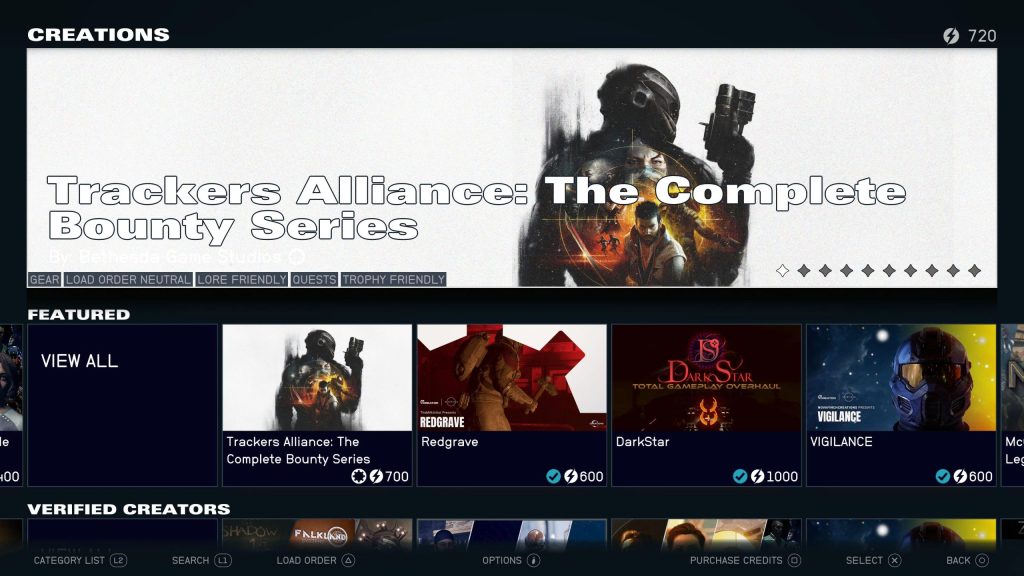
Then there’s Creations. These are both Bethesda and Community driven content (free and paid) that quietly transform what Starfield is and can become. By selecting “trophy friendly” content you can add in simple, but not game changing content that can add some depth. Or you can completely re-write everything and not be beholden to trophies. My suggestion would always be to experience Starfield as close to vanilla as possible first, because NG+ and Creations can then give you a different vibe all together.
Creations open the door to something far beyond the base game, and I like what Bethesda has done with this. Yes, a portion of the money goes to the person / people who created the content, and the rest goes to hosting etc… Should people be paid for their work? Absolutely. I just cannot comment on how much they get as I do not know. Thankfully all content is also from the “Verified Creator Program” so you can be assured you’re paying for quality material.
Together, these systems and updates show a version of Starfield that’s deeper and more flexible than its original launch. There’s real quality here, especially for players willing to carve out their own experience.
Reflection – A Better Journey, Still Missing Direction
Coming back to Starfield on PS5 Pro after initially dismissing the game back in 2023, shows me clearly that this is significantly improved version of the game. Systems are deeper, traversal is more engaging, and there’s a lot of polish here that simply didn’t exist at launch. It gives me that Cyberpunk 2077 journey all over again. For the first time it feels like a world that’s easier to settle into, and easier to stay in.
Yet after more than 80 hours, what stands out still hasn’t changed for me. For Starfield’s scale, flexibility and freedom, it struggles to create a sense of urgency.
Starfield offers countless paths to follow, but very little to prioritise any of them. Progress becomes optional, momentum is definitely self-driven and the experience as a whole, just feels like it’s expanding rather than world building.
That said, it doesn’t make Starfield a bad game, far from it. In fact, for the right kind of player, and I know there are many (I frequent the Reddit boards). Starfield might be exactly what they are looking for, a vast, open-ended RPG that rewards curiosity and patience over structure and pace.
For others, like me, who look for a narrative pull, it may still feel like something is missing.
This latest release of Starfield is the game at its best. A richer more complete game that fixes a lot of the journey, yet still leaves the destination just out of reach.
A place easier than ever to get lost in. But the question remains; will you ever feel found?
Rapid Reviews Rating

4 out of 5
4

Pragmata Review

You May Also Like
Far Cry 6 Review

Google Stadia Rapid Review In Progress