Pragmata Review
Fast Facts
Pragmata
Developer: Capcom
Publisher: Capcom
Website: https://www.capcom-games.com/pragmata/en-uk/
Genre(s): Action-Adventure
Platform: PS5 (also available on Steam, Nintendo Switch 2 and Xbox Series X/S)
Age Rating: PEGI 16
Release Date: 17/04/2026
Price: £49.99
A code was provided for review purposes
Intro
They say “art imitates life” an this couldn’t be more true with Capcom’s latest offering, Pragmata. A tale of robots, 3D printing, AI and of course big lasers. Pragmata’s unique approach to combat, and futuristic setting give it a distinctive look in the current gaming climate. Read on to find out if Capcom’s Pragmata is a worthwhile investment, or a waste of filament.
Story
Pragmata follows the story of Hugh, an engineer for the Delphi Corporation, as he and his team are sent to a lunar base (known as The Cradle) as it has lost communication with Earth. The base is eerily absent of humans, but Hugh and his team press on to try and restore communications. We’re quickly introduced to the reason The Cradle even exists, and that’s to mine a material known as “lunafilament” which is used to 3D print all manner of things. After a sudden moonquake happens, the team are either crushed by falling debris or ejected out into the void of space. All bar Hugh, who’s knocked unconscious until being brought back around by an android girl known as D-I-0336-7, who he affectionately calls “Diana”. And so begins Hugh an Diana’s journey through The Cradle to find out why exactly it lost contact with Earth and more importantly…discover where all the humans have gone.
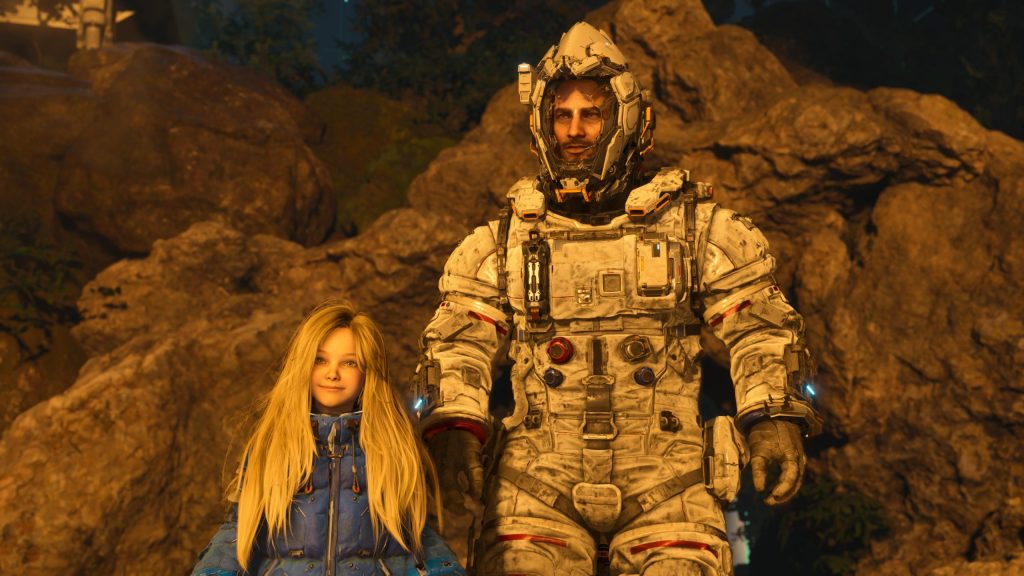
The game won’t be winning any awards for its story telling, but it is full of the classic Capcom twists and turns (albeit if some of them are obvious to spot). That said, regardless of the fact it’s no Shakespearean epic, it’s still a good fun story that manages to hit a lot of emotional beats. As you learn more about Hugh and Diana, the bond they share will start to pull at your heart. It doesn’t try to be anything it’s not, but what is does do is give you a reason to keep on progressing.
Gameplay
The obvious thing that sets Pragmata apart from other third-person action games is the combat. On the surface it looks like it’s going to be your standard “shoot the enemy until it stops moving” affair, but that couldn’t be further from the truth. Diana’s ability to “hack” enemy bots will allow them to take significantly more damage than if Hugh was to open fire on them alone. These “hacks” manifest themselves as small grid based puzzles that players navigate with the face buttons, all whilst using the analogue sticks and triggers to manoeuvre around and aim at the bots. On paper it sounds like a lot, and it can take some getting used to, but when it clicks it feels so right.
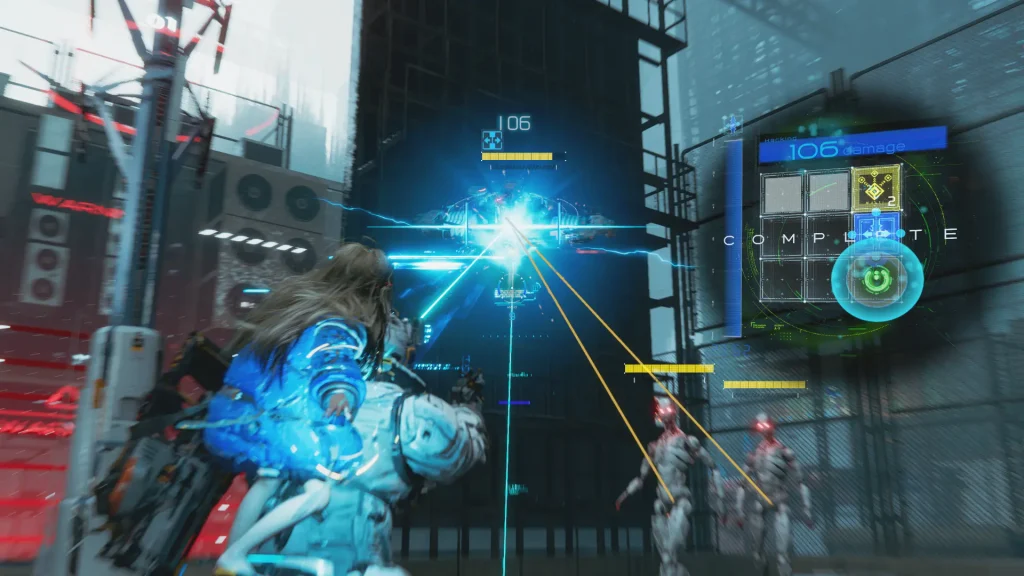
It’s not just a case of solving these puzzles by getting to the green square to “open” the enemy up, the path players take around these puzzles also matters. With different nodes offering different buffs when passed through, the more these stack the more benefits each hack will give. From nodes that increase your damage output, to ones that allow multiple bots to be hacked at the same time, to ones that even turn bots on each other. There’s a lot of strategy to this, with new layers added with each stage to allow for a constantly developing system. Every successful hack builds up Diana’s hacking gauge which, when full, allows for her to unleash a devastating “Overdrive attack” that does a lot of damage to anything in her path.
Don’t worry though, if you find that you’re struggling with the hacking there’s even a buff that allows for it to be done automatically, albeit at the cost of some hacking gauge. Which can be great if you’re in a pinch and trying to dodge a myriad of attacks from a room full of bots.
Pragmata constantly rewards the player with new unlocks and abilities to power up. This is all done back at “The Shelter”, which is essentially your base inside The Cradle, where Hugh and Diana get some respite from their battles. There’s a whole host of things to do at The Shelter, from the aforementioned upgrades, to training missions, reading bot information, digesting story logs, and even 3D printing some real world objects for Diana to enjoy (known as Real Earth Memories, or REM for short). It’s a welcome change of pace to the rest of the game and really helps you set yourself up for the next trek into Pragmata’s world.
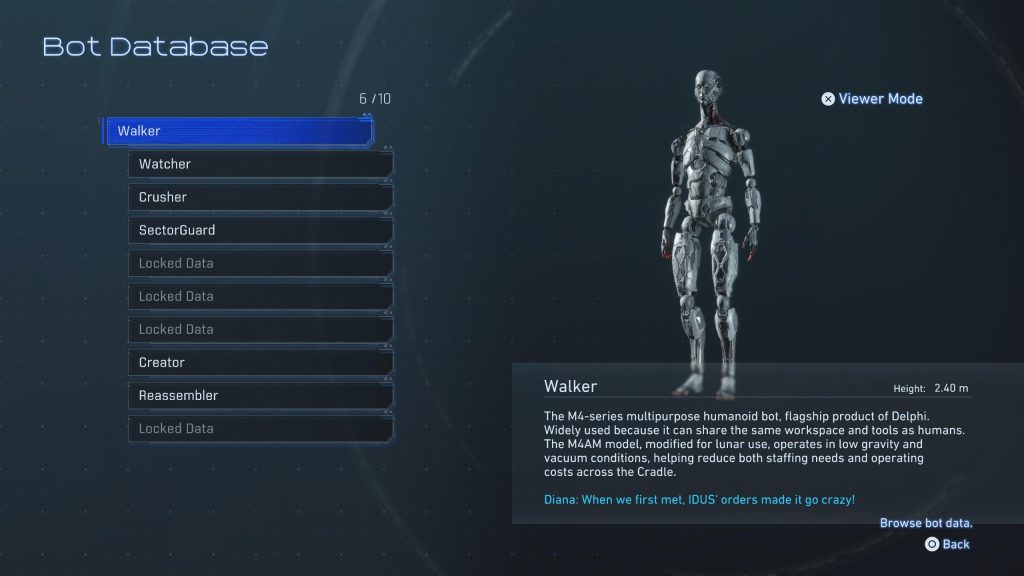
Unlocks come through normal story progression as well as through “Cabin Cards” which is essentially bingo but played with tokens found in each stage. Every token placed unlocks new things, even outfits for Hugh and Diana. There’s so much to do in The Shelter, it’s easy to spend ages just playing the training missions over and over to unlock new currencies to use for upgrades, or get stuck into optimising your load outs.
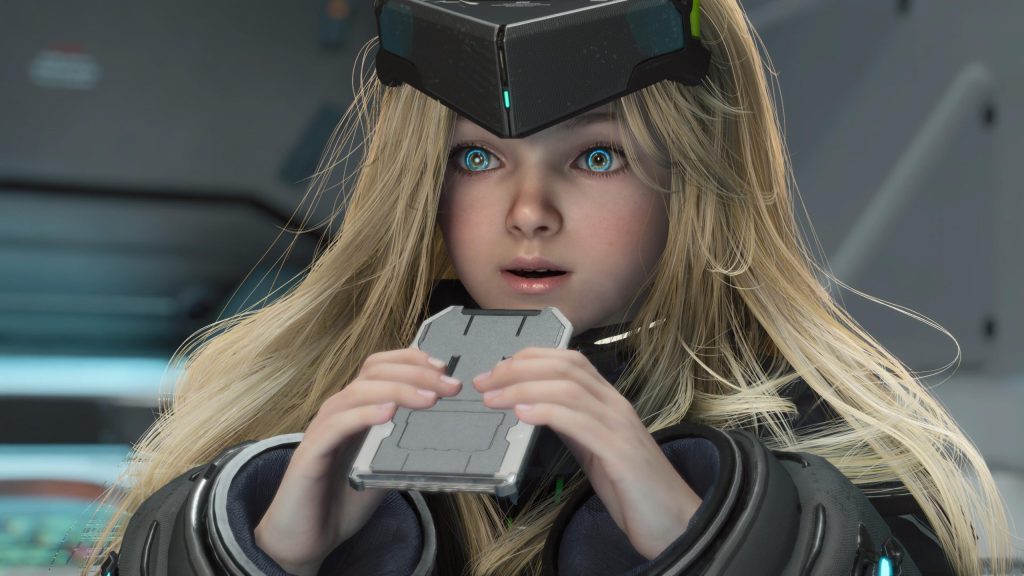
Another way that The Shelter shines through is that it allows Hugh and Diana’s relationship to blossom, not only do you get to see just how much Hugh starts to care for her, but when Diana is presenting you with hand drawn crayon images of you and her it’s hard to not let out an “aww”. Capcom have created a little magic there.
There’s so much crammed into Pragmata that players will never be lost for something to do. Yet, even with all of that, it doesn’t feel like players are constantly being bombarded with new systems to learn. Each weapon has its own distinct play style, each different hacking node requires careful consideration if players wish to activate them, and each section of the map rewards players for exploring off the beaten path.
That’s where one of our major gripes comes in though, the map. It’s a static map that tells you the area you’re currently in, but not the exact location or give any detail of where you’re heading. It feels kind of useless, and if it had a bit more to it then it would’ve been a really useful tool. That said, if this is our only big issue with the gameplay side of stuff the it’s safe to say Capcom are onto a winner.
Presentation
Pragmata is gorgeous, there are no two ways about it. Capcom have pushed their RE Engine to deliver some of the best visuals we’ve seen in recent memory. This review was done on a PS5 Pro and it was easily one of the most impressive visual feats we’ve played in a long time. The Cradle looks and feels exactly like you’d expect a lunar base space station to feel. With lots of reflections, bright lights and shining surfaces. The detail is just amazing.
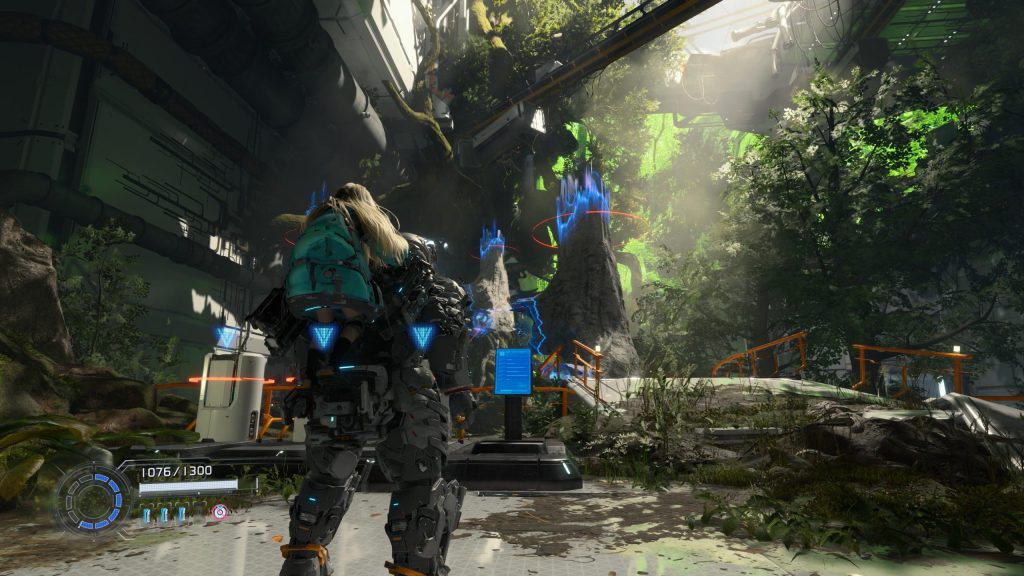
Hugh and Diana’s models are highly detailed too, with some of the most impressive hair physics seen (those are words we didn’t think we’d be writing). Pragmata really captures that sci-fi futuristic aesthetic and runs with it. Each bot has its own look and feel, with the boss fights being even more jaw dropping. Even though players are going to be locked in to the combat and puzzle solving during them, they still shine as a great feast for the eyes.
When it comes to audio, the atmospheric sounds of The Cradles fit perfectly with music that gets ramped up when combat begins. It’s a classic Capcom touch but it works so well here. Sometimes the music can be a little too telling though, and certain audio cues can give away story beats before they’ve been fully revealed. You’d think with only Hugh, Diana and The Cradle’s AI I.D.U.S being the main cast, that players would get bored of hearing their voices. This couldn’t be further from the truth as the voice acting is wonderfully done.
PC Performance
(PC commentary provided by Pete Beckett)
When it comes to performance, Capcom are standing head and shoulders ahead of the competition. The RE engine continues to show why it’s becoming the industry standard, offering captivating visual fidelity with flawless framerates, with a very heavy emphasis on highlighting it’s 3rd person action games regardless of what platform you play it on.
Pragmata is absolutely no exception to this rule. During my time with the game, which was played on a PC with a Intel i7 10700F – 8-Core 2.90GHz, 4.80GHz processor, with a RTX 5060TI 16GB GPU and 64GB of DDR4 RAM, had it set to high settings on 1440P, V-sync on and raytracing enabled, the game always stayed between 90FPS and 125FPS, with no stutters, slowdown or CPU bottlenecking. Alongside Resident Evil Requiem this year, it highlights how incredibly well Capcom have become at putting out PC versions of their games without alienating the PC player base.
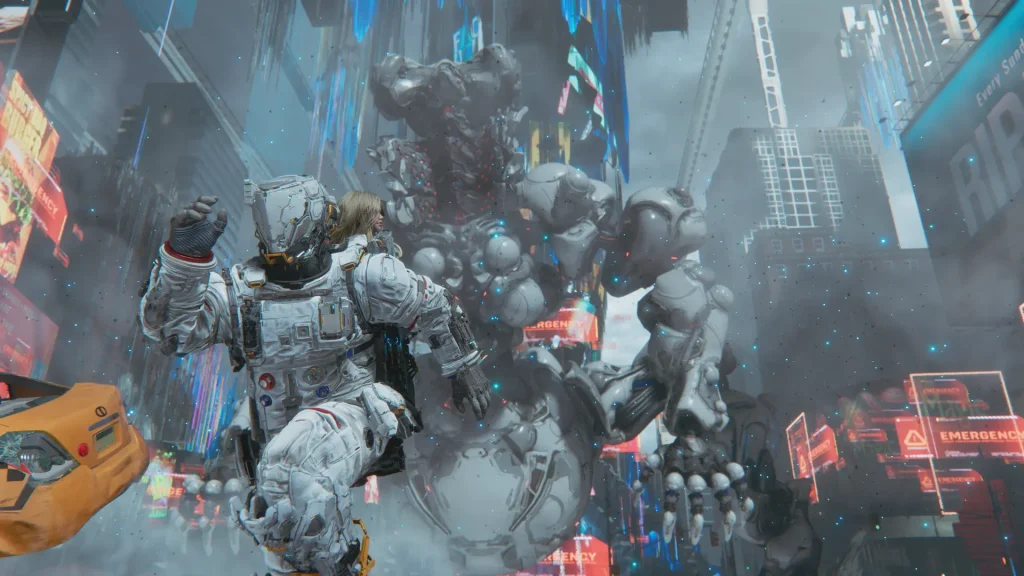
I am absolutely stunned with how well it ran on my setup, and how gorgeous the game looked. Whilst it was only using around 8GB of the onboard memory, it is easily one of the best looking games I’ve played this year, with exception to Crimson Desert.
Conclusion
Buy Pragmata. We cannot stress enough how much of a fun experience this game was to play. Capcom have gone from strength to strength recently and this feels like another huge success for them. Yes the story is a bit weak at times, yes the core mechanics can take a little to get used to, but it all pays off. Pragmata is an excellent game that will tug at your heart strings and really make you reconsider the next time you fire up an AI chat bot.
Rapid Reviews Rating

4.5 out of 5
Pragmata can be bought for PS5 here.

You can find and read our reviews on OpenCritic.