
Card en Ciel Review
Fast Facts
Card en Ciel
Developer: INTI CREATES CO., LTD.
Publisher: INTI CREATES CO., LTD.
Website: https://card-en-ciel.com/en/
Genre(s): RPG
Platform: PC
Age Rating: PEGI 12
Release Date: 24/10/2024
Price: 20.99
A code was provided for review purposes
Building a Deck of Cards
Card en Ciel is a rogue-like deck builder where I navigated dungeons to capture anomalies and save the world from being hacked. Throughout the journey, I met the protagonists from a variety of in-game universes, which was neat and added character to the world. However, as someone who is largely unfamiliar with those worlds, I played this title primarily for the gameplay. Does Card en Ciel impress? Find out in this Rapid Review.
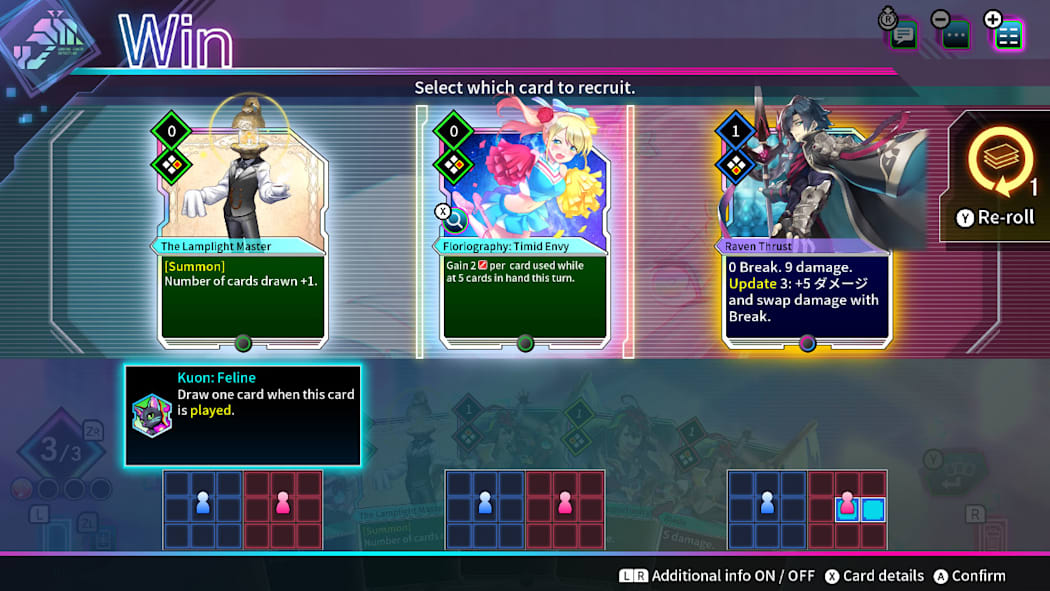
As I mentioned earlier, the gameplay was the most important aspect of this game. While the primary gameplay loop is somewhat simple, I found it enjoyable. I collected different cards to battle with within each dungeon by collecting treasure chests or completing battles. Many of the cards had effects. It was easy to create synergies among the cards. This was neat too. I appreciated how the cards encouraged me to actively choose which would be helpful with my current deck composition.
In particular, I appreciated a mechanic called update. This mechanic adjusted the base stats of a card depending on how many times a card was played while it was in hand. This synergised with an ability called suspend, which enabled cards to be saved in hand after the turn. However, this also worked well with cheap decks, which create inexpensive units. Though this ability was particularly memorable, I enjoyed how Card en Ciel continually integrated new ways to explore old cards.
Time After Time
In addition to adding cards, I could enhance and remove cards from my deck. This forced me to decide which cards were integral, as I could boost those and remove the filler cards to prevent them from showing up. I found this particularly helpful since every new dungeon provided a new starter deck. This starter deck often had weak cards, which were serviceable at the beginning of the game but were unhelpful in the aggregate. Weeding out these cards or selecting the ones I needed to enhance felt good and encouraged critical thinking and team building.
I also appreciated that each dungeon both focused on a new idea and reset my cards. These two elements combined, forcing continued innovation and creativity. Moreover, after every successful combat encounter, selecting a card to add is mandated. Skipping this draw is not possible. This was a good thing, as it encouraged me to fit niche cards into my deck and induced experimentation with the various mechanics.
Despite the deckbuilding benefits from Card en Ciel’s rogue-like design, the game stagnates a bit too. Fights blend, as the minute-to-minute gameplay is similar within all of them. Regardless of who I fight, the main priority is avoiding telegraphed attacks by using my cards to move around the board. Of course, while dodging is important, using cards to damage my opponents is nearly as important. These two concepts are fairly simple. While I enjoyed this a lot in the beginning of my playthrough, towards the end, I found myself getting a bit bored.
Additional Bonuses
To combat this stagnation, Card en Ciel features both a progression system and bonus challenge rewards. As I completed runs in the dungeon, I unlocked different upgrades which became available for my cards. This made me innately more prepared for future dungeon runs. I enjoyed this. The bonuses are not overwhelmingly powerful, but I enjoyed their inclusion. On the other hand, there are unlockable difficulty options that make the game harder, as well as a performance rating at the end of each stage to monitor how quickly I get through each dungeon. The inclusion of these features was great, but I do not see myself revisiting each area to push for high scores.
Additionally, the game is tied together with a story that contextualises the in-game universe collision. The story was underwhelming, but this was not the core focus of the game either. Despite this, I was disappointed by the implications behind some of the comments. While nothing was explicitly graphic, there were a decent number of downright embarrassing comments, especially considering that they were fully voice-acted. This took away from the experience and makes it slightly harder for me to recommend this game across the board, as I imagine others will feel the same way.
World Design
Although the story did not meet my expectations, the sound design (with some exceptions) was solid. I enjoyed the voice acting and music throughout. Some of the songs even got caught in my head. The music even complemented the gameplay when a muse was present. These characters sang along with the music, boosting certain effects. This mechanic was neat and worked well to merge design with function.
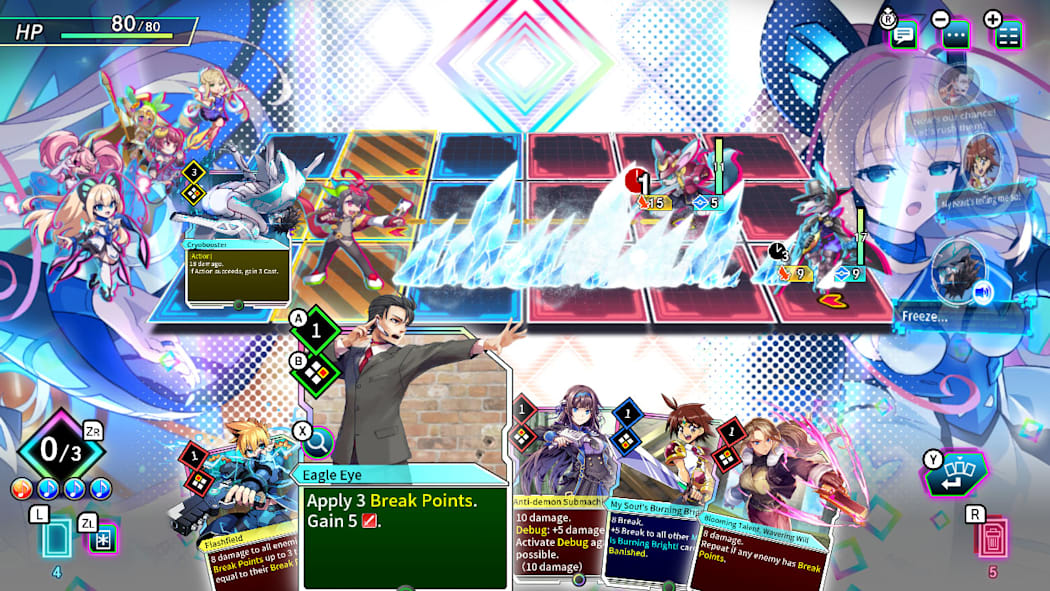
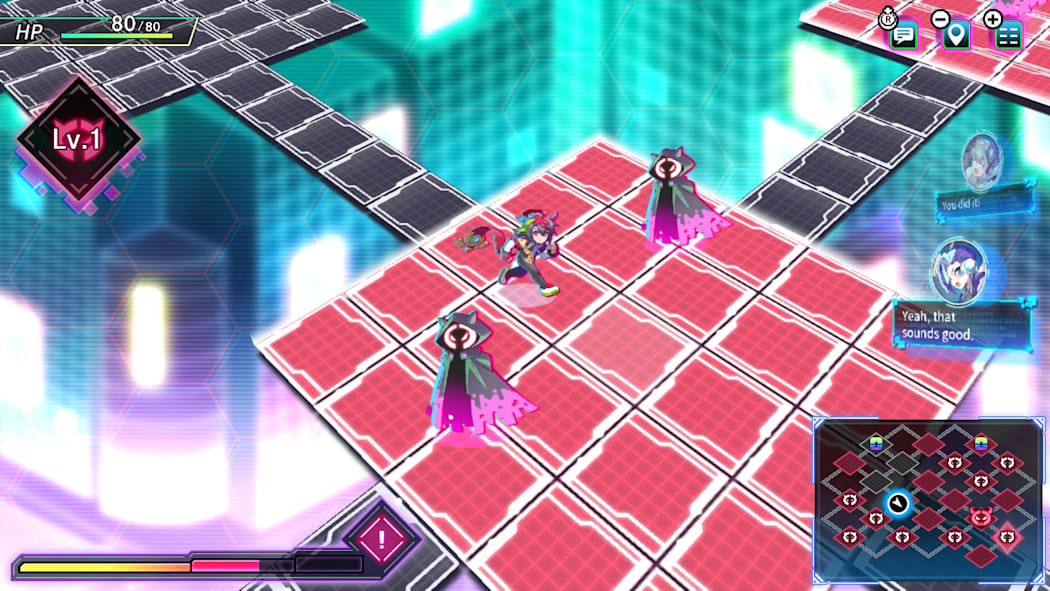
On the other hand, the visual design was fine, but not my favourite. All dungeons were plain black areas with static enemies roaming around. The enemy and card designs were neat, but felt out of place in the void dungeons I explored. Additionally, every time certain effects happen, a big pop-up of the muse would display on my screen, slowing down the pacing of every battle. This was not necessarily an issue, but this occurred often, considering how effective it was to create combinations of cards with synergies. While the card designs were cool, everything else was bland and left the design as a whole feeling mediocre.
Overall, while there are some decent downsides, the core gameplay loop of Card en Ciel certainly is fun. I liked building decks of cards to take out enemies and experimenting with the different card attributes. Though the story and design were nothing special, this game does still offer some fun gameplay.
Rapid Reviews Rating

3.5 out of 5
3.5

You can find and read our reviews on OpenCritic.


You May Also Like

Draugen Review
Curse Of The Dead Gods – Xbox Series X Review